







Automation of older milling machines: how a universal solution creates added value
Machining production undoubtedly gained even more momentum in the course of the 19th century: universal milling machines were now developed to machine more complex shapes. Companies such as Hermle, Chiron, Fanuc, Fehlmann, DMG Mori, Doosan, Hurco or Mazak are among the pioneers in the construction of milling machines, whose beginnings date back to the second half of the 20. Century date back. At the same time, automation took another leap forward with the development of numerical control (NC), the great success of which has continued to the present day with CNC control.
Automation - What is it?
Automation is the term used by experts to describe the use of machines and technologies with the aim of making human work easier. In industrial production, for example, milling machines such as those from Awea are used, Axon, Brother, Hedelius, Grob, Haas, Hurco, Hyundai, Kern, Leadwell, Makino, Mikron, OKK, Okuma, PosMill, Röders or Spinner programmed and controlled in such a way, that they can carry out specific processes independently. Then as now, this automation has many advantages. The most popular are certainly increased efficiency, consistently consistent component quality and, of course, lower unit costs in the manufacturing process.
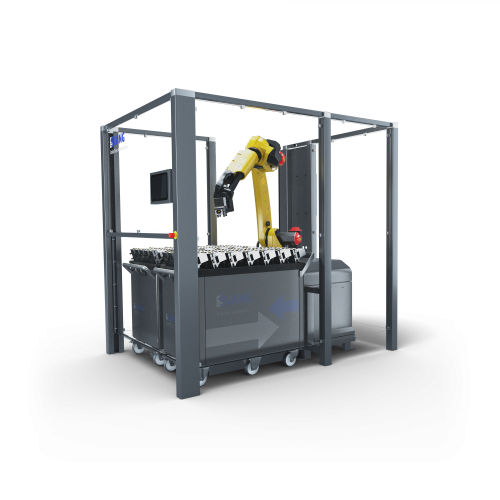
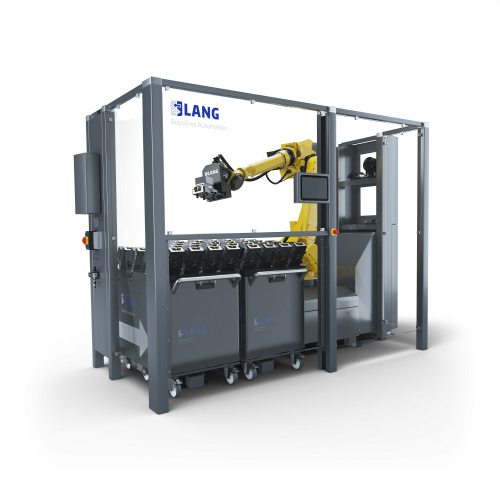
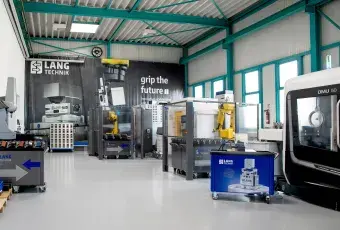
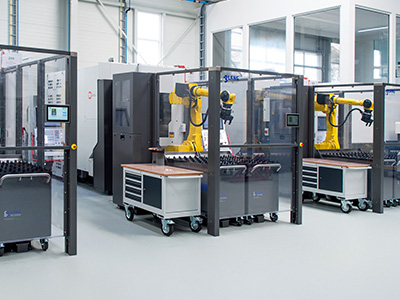
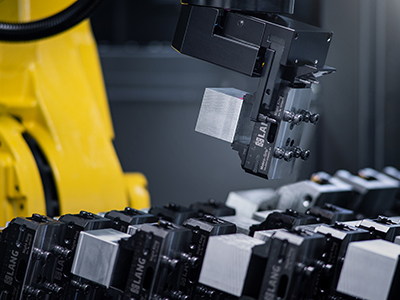
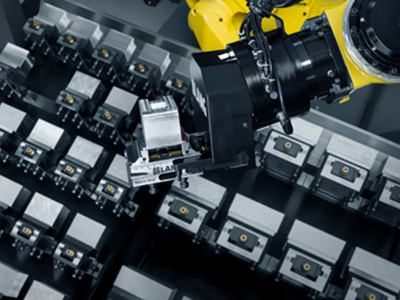
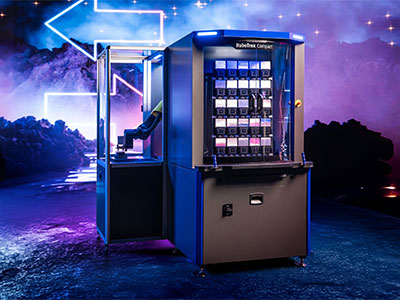
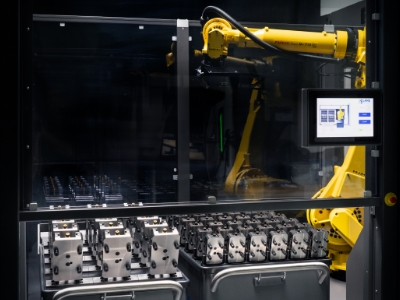
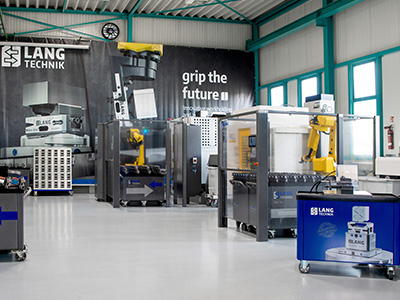
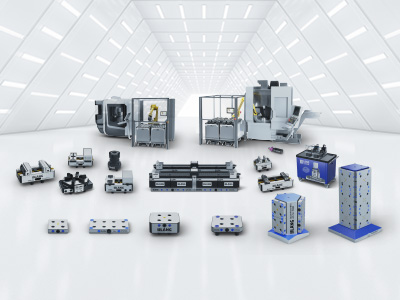
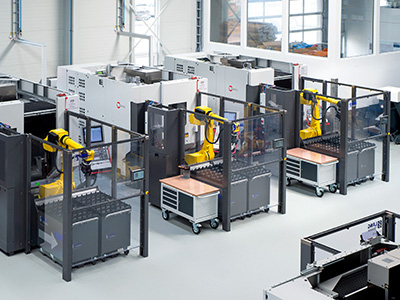
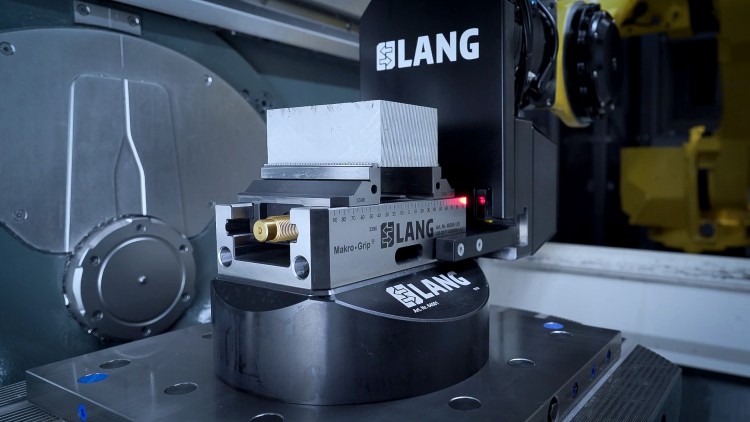
In principle, the concept of automation is based on machine tool manufacturers linking different technologies in or on milling machines in such a way that this collaboration produces even better results in even shorter times. In addition to ever-improving CNC controls that ensure extremely precise movements on the milling machine, for example, the integration of robot technology - such as the RoboTrex - can also be described as a measure for automation. The advantage here: RoboTrex can be described as a universal solution for automating almost any milling machine. Installation, commissioning and user guidance are relatively simple compared to other automation systems.
In addition to robotics, innovative future-proof concepts for automation of milling machines is increasingly using concepts for using artificial intelligence (AI) and the Industrial Internet of Things (IIoT) in addition to state-of-the-art sensor and measurement technology. The aim: to record, transfer and analyze data on a milling machine.

Older machines: automate with universally usable technology
Whether automation for small and medium-sized companies or large automation projects in corporations - they all have a significant impact on their production processes. One key question: can older machines also be automated? Are the investment costs for automation in an acceptable ratio to the benefits for the company? Is there unused capacity in existing machining centers that can be better utilized through automation? Does the milling machine or the planned automation solution meet certain requirements for combining these two elements? Older machines often lack an appropriate media feed-through for pneumatic or hydraulic zero-point clamping systems. Retrofitting is associated with very high costs, if at all. An external supply is technically out of the question, especially for 5-axis machines. RoboTrex offers an efficient, albeit simple, method of automating machines without media feed-through. The variety of machine tools automated with RoboTrex is constantly growing. The universally applicable automation system is suitable for, among other things Alzmetall, Awea, Axon, Brother, Chiron, DMG Mori, Doosan, Fanuc, Fehlmann, Grob, Haas, Hedelius, Hermle, Hurco, Hyundai, Kern, Makino, Mazak, Mikron, OKK, Okuma, PosMill, Röders or Spinner Fräsmaschinen. This makes the technology the solution with which SMEs can automate across the board.
Questions and answers
What technical requirements does my machine tool need for RoboTrex?
In the simplest case, a free M-function is sufficient for interlinking with the automation system.
How long does it take to install RoboTrex Automation?
Three to five days including operator training.
We have a small budget. Is automation also possible for us?
It may be particularly useful for you. The amortization period is relatively short. Experience has shown that our customers increase their order volume with us and produce more at lower costs.
For more questions and answers on this topic, see the following page:
FAQ